Birmingham's Most Dangerous Intersections of 2024 and 2025


Why Intersection Safety Matters
Traffic crashes remain a serious problem in Alabama. The 2024 Crash Facts report from the Alabama Department of Transportation (ALDOT) recorded 967 motor‑vehicle fatalities statewide and just over 140,000 crashes, with injuries down about 3%. Despite this slight improvement, the report warns that distracted driving, impaired driving, and failure to wear seatbelts continue to contribute to severe crashes. Jefferson County (where Birmingham is the county seat) consistently ranks among Alabama’s highest‑crash counties.
This article highlights intersections in Birmingham and surrounding areas that attracted news coverage in 2024–2025 because of serious crashes or safety complaints. The goal is to help drivers understand where extra caution is needed and to encourage infrastructure improvements.
Notable High‑Risk Intersections

Dead Man’s Curve – I‑20 West at I‑59/I‑65 interchange
- Why it’s dangerous: The tight loop ramp known as Dead Man’s Curve forces drivers to slow dramatically while merging. Large commercial trucks (18-wheelers) frequently overturn, spilling cargo and creating traffic hazards.
- Recent evidence (2024–2025): In July 2024, Birmingham Fire and Rescue responded to an overturned 18‑wheeler on the ramp. Crews reported no injuries but had to contain a diesel fuel spill and urged drivers to avoid the area. A similar July 2024 report from ABC 33/40 said the truck was not carrying hazardous material, but crews worked to contain the leak.
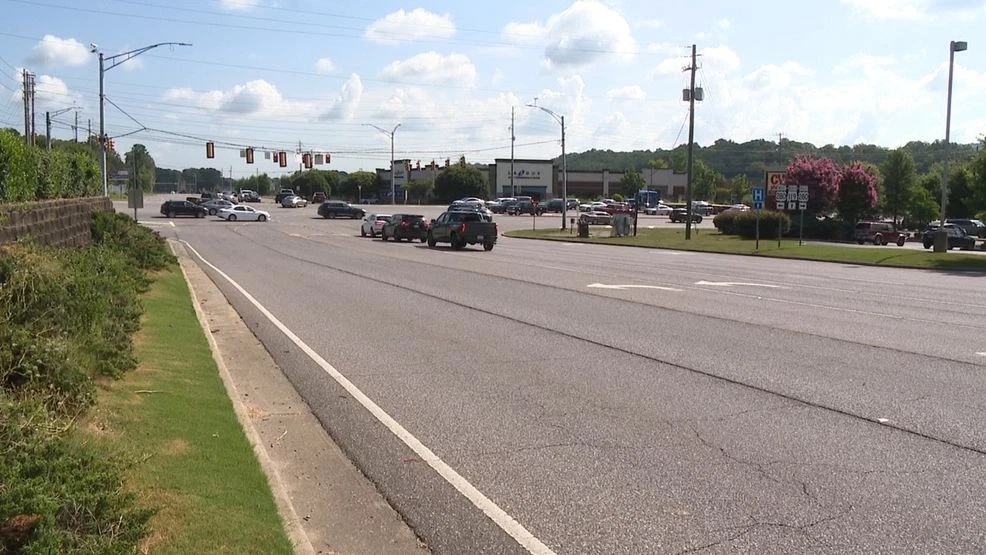
US 280 & State Route 119 (Hoover)
- Why it’s dangerous: Faded lane markings make it hard for motorists to stay in their lane when turning. Drivers sometimes cross into oncoming traffic or drift into the turn lane, causing crashes and road rage incidents.
- Recent evidence (2024–2025): In August 2025, a Hoover couple told ABC 33/40 that the double yellow line at Highway 119 and Highway 280 was almost invisible, causing drivers to cross over and leading to serious wrecks.. Hoover police recorded 23 crashes at the intersection since January 2024.. ALDOT said crews would repaint the striping to improve visibility.

University Boulevard & 28th Street (UAB District)
- Why it’s dangerous: Heavy hospital traffic, pedestrians, and confusing turns near the University of Alabama at Birmingham (UAB) lead to congestion and collisions.
- Recent evidence (2024–2025): A TIME Magazine analysis of National Highway Traffic Safety Administration data (2003‑2012) ranked this crossing as Alabama’s most dangerous intersection. Patch’s coverage notes that the intersection was the scene of two fatal accidents during the study period and remains hazardous.
West Oxmoor Road & Huntingdon Parc
- Why it’s dangerous: Fast‑moving traffic and high crash volume.
- Recent evidence (2024–2025): The same Patch article lists this Hoover intersection among the metro area’s high‑accident spots.
14th Street West & 3rd Avenue West (West Birmingham)
- Why it’s dangerous: Night‑time visibility is poor, and drivers sometimes speed through the area.
- Recent evidence (2024–2025): In August 2025, a 33‑year‑old man died after a multi‑vehicle crash at this intersection. WBRC reported that the crash occurred at 2:26 a.m. and the Birmingham Police Department is investigating.
Morgan Road (between I‑459 and South Shades Crest Road)
- Why it’s dangerous: Two‑lane road with heavy commuter and truck traffic; numerous driveways and cross‑streets cause turn conflicts.
- Recent evidence (2024–2025): A November 2025 Montgomery Advertiser report (via Yahoo News) described Morgan Road as a busy Birmingham artery where frequent intersections, cross streets, and business entrances contribute to accidents.
Highway 280 corridor (general)
- Why it’s dangerous: This arterial route carries heavy commuter traffic and multiple turn lanes. High speeds and frequent signalized intersections increase the risk of rear‑end and side‑swipe collisions.
- Recent evidence (2024–2025): The same Montgomery Advertiser report noted that Highway 280 experiences heavy traffic and frequent intersections, and that multiple lanes and turning movements make collisions more likely.
Malfunction Junction – I‑20/I‑59/I‑65 interchange
- Why it’s dangerous: Complex design requiring quick lane changes. Congestion causes frequent rear‑end collisions.
- Recent evidence (2024–2025): The Montgomery Advertiser article referred to Birmingham’s infamous “Malfunction Junction” as a spot where I‑20, I‑59, and I‑65 meet, noting that the complex layout and congestion make it one of the city’s most hazardous driving spots.
Contributing Factors To Accidents
The news reports above reveal patterns that make these intersections dangerous:
- Tight curves and complex interchanges: Dead Man’s Curve and Malfunction Junction require abrupt speed changes and multiple merges, which can cause rollovers and rear‑end crashes.
- Worn or confusing road markings: Faded paint at US 280 & 119 allowed drivers to drift into opposing lanes.
- High‑speed arterial roads: Highway 280 and Morgan Road carry commuters and commercial vehicles at high speeds, leaving little room for error.
- Mixed traffic and pedestrians: University Boulevard near UAB combines hospital traffic with pedestrians and cyclists, increasing conflict points.
- Night‑time or low‑visibility conditions: Crashes like the fatal collision at 14th Street West & 3rd Avenue West often occur during the early hours.
Safety Tips for Drivers
- Slow down and anticipate hazards. Approach tight curves (e.g., Dead Man’s Curve) well below the posted speed limit and allow extra stopping distance.
- Stay alert. Avoid distractions like texting; ALDOT’s 2024 report emphasises distracted driving as a key crash factor.
- Obey lane markings. At intersections where striping is confusing, reduce speed and watch for upcoming improvements.
- Use caution at night. Limited visibility increases risk at poorly lit intersections; ensure headlights are on and watch for pedestrians.
- Plan alternate routes. During peak hours, consider avoiding congested areas like Highway 280 or Malfunction Junction.
About Pittman, Dutton, Hellums, Bradley & Mann, P.C.
Navigating Birmingham’s hazardous intersections requires vigilance, but accidents still happen. If you or a loved one has been injured in a crash, Pittman, Dutton, Hellums, Bradley & Mann, P.C. is here to help.
Our experienced attorneys investigate crash scenes, gather police and ALDOT data, work with accident‑reconstruction experts, and pursue fair compensation for medical bills, lost wages, and pain and suffering.
We offer free consultations and work on a contingency‑fee basis—you pay nothing unless we recover for you.
Contact us to discuss your case and let us protect your rights.


- Car Accidents
- Firm News
- Personal injury
- Product Liability
- Wrongful Death
Fill out the form below to contact our firm. One of our experienced attorneys is prepared to speak with you. Consultations are free and confidential.
Have you been injured in an accident?
.png)
Pittman, Dutton, Hellums, Bradley & Mann is a team of personal injury lawyers in Birmingham, Alabama. We serve clients throughout the United States for all types of personal injury cases.
Navigation
Get Social
© 2026 Pittman, Dutton, Hellums, Bradley & Mann, P.C. - All Rights Reserved
The recoveries and testimonials on this website are not an indication of future results. Every case is different, and regardless of what friends, family, or other individuals may say about what a case is worth, each case must be evaluated on its own facts and circumstances as they apply to the law. The valuation of a case depends on the facts, the injuries, the jurisdiction, the venue, the witnesses, the parties, and the testimony, among other factors. Furthermore, no representation is made that the quality of the legal services to be performed is greater than the quality of legal services performed by other lawyers.
Managed By WiseGuys Digital Marketing
.png)

